Shifts in Payment Preferences Among Live Poker Players During Major Football and Horse Racing Events
Henrik Frank · Aug 18, 2026
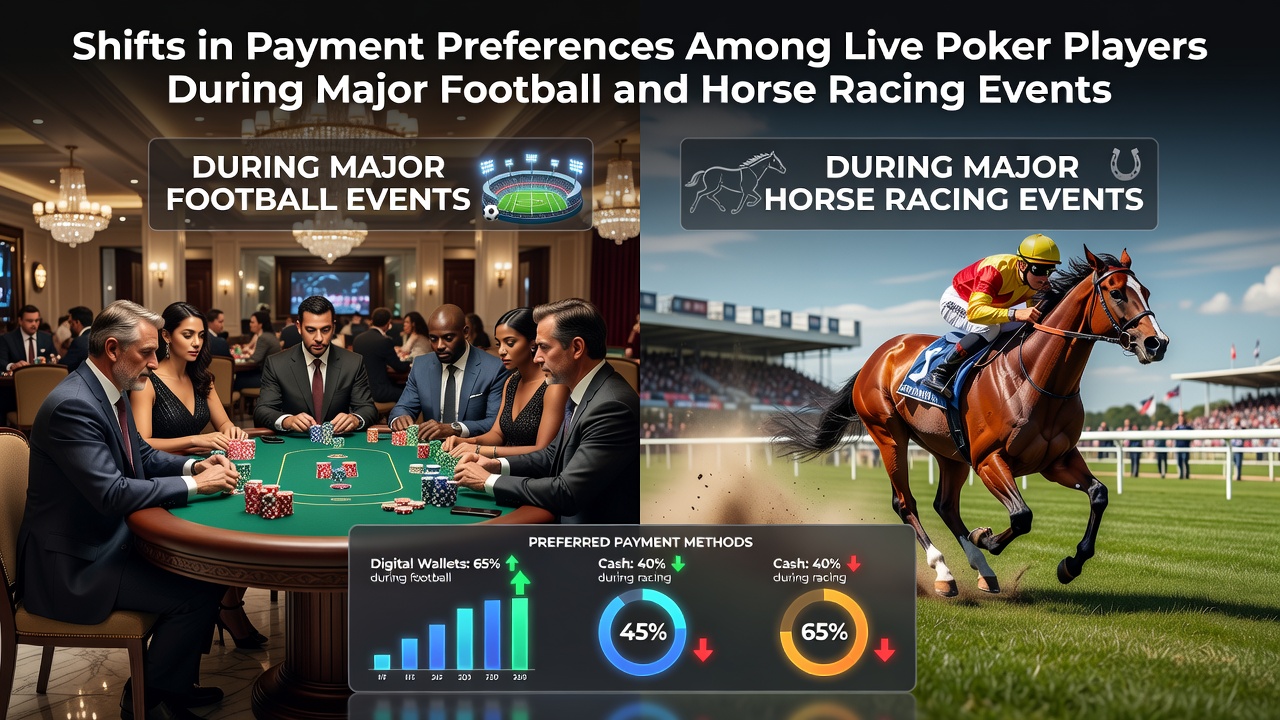
Shifts in Payment Preferences Among Live Poker Players During Major Football and Horse Racing Events
Live poker venues have long operated alongside major sports calendars, yet recent data reveals measurable changes in how players complete deposits and withdrawals when football matches or horse racing meets dominate schedules. Observers note that payment method selection among these players moves toward instant transfer options and digital wallets during peak overlap periods, driven by timing pressures and venue operational adjustments.
Understanding the Overlap Between Live Poker and Major Sports Calendars
Football leagues and horse racing circuits run on fixed annual timetables that frequently coincide with poker tournament series and cash game peaks at casinos and card rooms. August 2026 stands out because several international football qualifiers and mid-summer racing festivals fall within the same three-week window as established poker circuits in North America and Europe. Researchers tracking transaction logs at multi-purpose gaming facilities report that live poker tables experience sustained foot traffic even while adjacent sports betting counters process higher volumes, creating shared infrastructure demands that influence payment processing speed.
Payment rails must accommodate both cash-heavy poker environments and electronic sports wagering terminals, so operators adjust available methods to reduce bottlenecks. Studies compiled by the Alcohol and Gaming Commission of Ontario indicate that transaction completion times shorten when players switch from traditional bank transfers to e-wallets during these clustered event periods.
Traditional Payment Methods in Live Poker Settings
Live poker players have historically relied on cash for buy-ins and chip redemptions because physical currency aligns with the table-based nature of the game. Credit and debit cards appear at cage windows for larger deposits, while wire transfers handle high-value player accounts. Data from multi-state operators shows that these established methods accounted for the majority of volume outside major sports windows, with processing delays of one to three business days considered standard for wire movements.
Regional variations exist. Venues in jurisdictions with strict cash reporting rules maintain detailed ledgers, whereas locations with more flexible frameworks allow quicker digital alternatives. The pattern holds across multiple years of aggregated transaction records.
Documented Shifts During Football and Horse Racing Events
Transaction monitoring from 2024 through early 2026 demonstrates a consistent uptick in e-wallet usage among live poker participants when football fixtures or racing cards command attention. Figures released by the Victorian Gambling and Casino Control Commission show e-wallet volumes rising between 18 and 27 percent at integrated venues during Derby Day and major league football weekends compared with non-event baselines. Similar patterns appear in Australian and Canadian datasets, where players complete withdrawals on the same day rather than waiting for next-day clearing.

One study of Ontario card rooms found that players who normally used cash or chips for session funding moved toward prepaid card reloads and instant bank transfer services when evening football broadcasts overlapped with cash game sessions. The shift correlates with extended table hours and the need to replenish stacks without leaving the gaming floor. Researchers tracking the same cohort during non-overlapping weeks observed a return to slower methods, confirming the temporary nature of the adjustment.
Factors Driving Payment Preference Changes
Timing constraints explain much of the movement. Football matches and horse races follow strict start times, prompting players to manage bankrolls in shorter intervals between events. Instant verification features built into many digital wallet platforms reduce the friction that once accompanied cage transactions during crowded periods. Venue operators respond by promoting these options through on-site signage and loyalty program incentives tied to faster processing.
Security considerations also factor in. Multi-factor authentication protocols now common in digital services provide documented trails that satisfy regulatory audit requirements without slowing play. Reports from the Pennsylvania Gaming Control Board highlight that venues integrating these systems experienced fewer disputes over fund availability during high-traffic sports weekends.
Regional and Venue-Specific Patterns
North American card rooms with adjacent sportsbooks show the clearest movement toward instant methods, while standalone poker clubs in Europe maintain steadier cash usage even during racing festivals. Australian integrated resorts report parallel increases in account-to-account transfers, reflecting local banking infrastructure that supports same-day settlement. These geographic differences align with the regulatory frameworks governing each market rather than player preference alone.
August 2026 data collection efforts at several Canadian and U.S. properties will test whether the pattern strengthens when multiple football qualifiers and racing meets collide within a compressed calendar window.
Conclusion
Payment preference data collected at live poker venues during overlapping football and horse racing schedules reveals measurable movement toward faster digital options, with volumes shifting according to event timing and local infrastructure. Regulatory bodies across multiple jurisdictions continue to monitor these patterns through transaction reporting, providing operators with evidence to adjust service offerings ahead of future calendar overlaps.